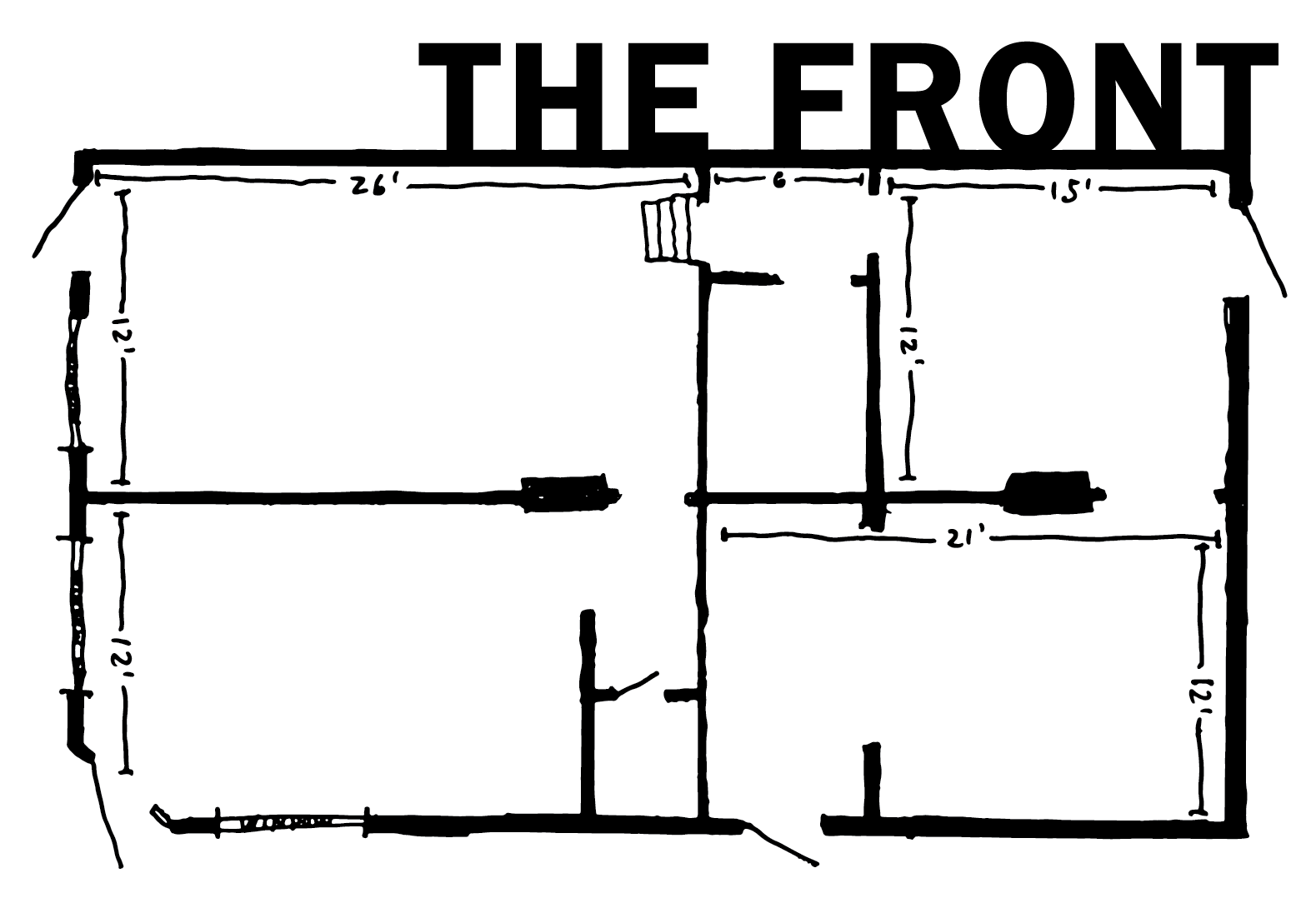
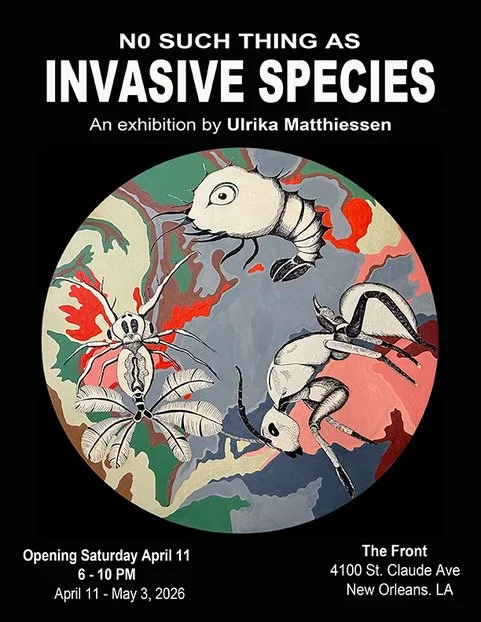
April 11, 2026 - May 3, 2026
Gallery open hours are Saturdays and Sundays, 12-5pm & by appointment (reach out to an artist)
Programming This Month
Saturday April 11th, 6-10pm
Opening Reception, Second Saturday
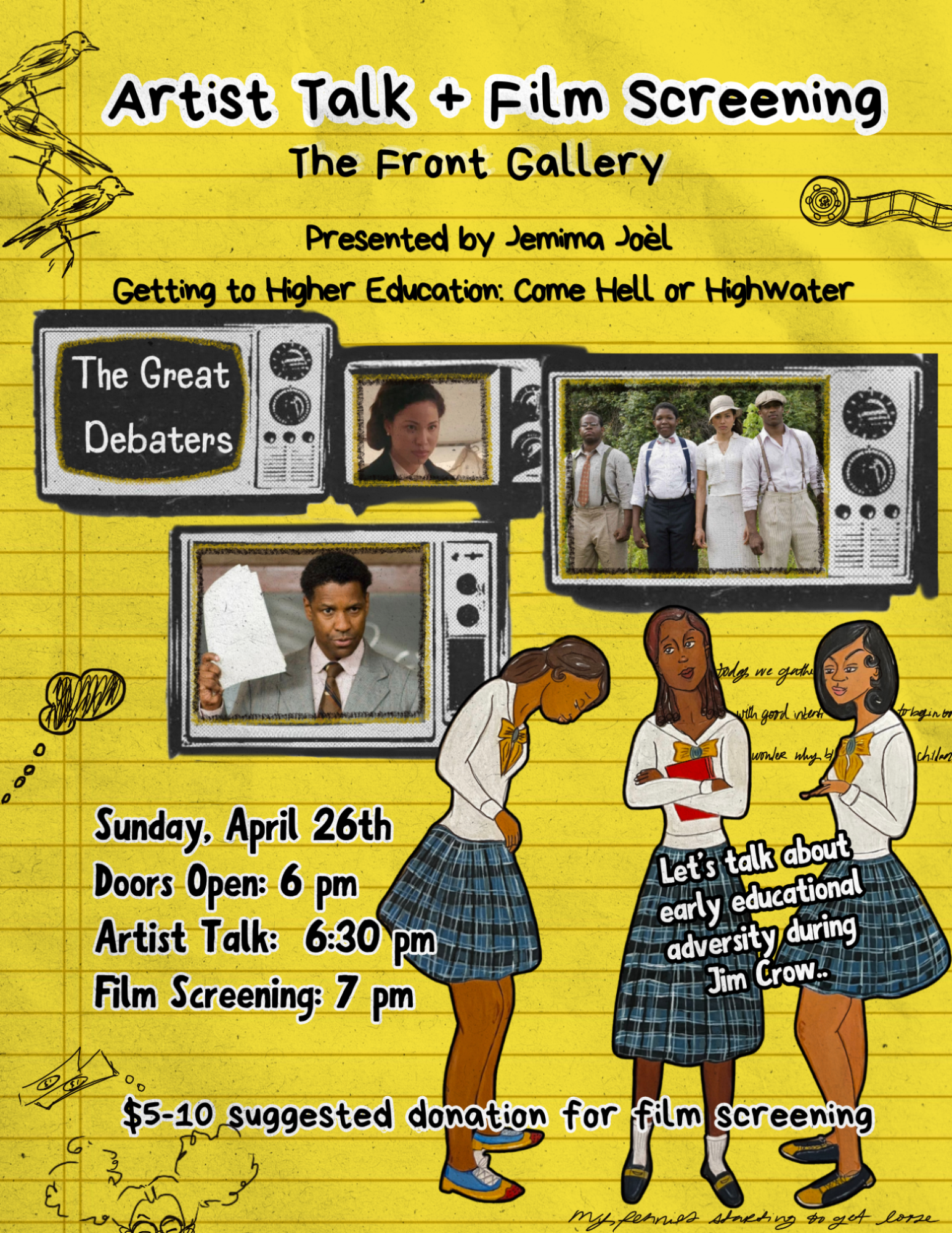
Saturday April 26, 6pm
6:00 Doors
6:30 Artist talk with Jemima Joèl, Room 1 7:00pm Film Screening, The Great Debaters
$`10-15 Suggested Donation for film screening
Wednesday April 29, 6:30-9:00pm
Second reception for Slip (room 2)
Saturday May 2, 2pm
Artist talk with Ulrika Matthiessen (room 4)
Room 1
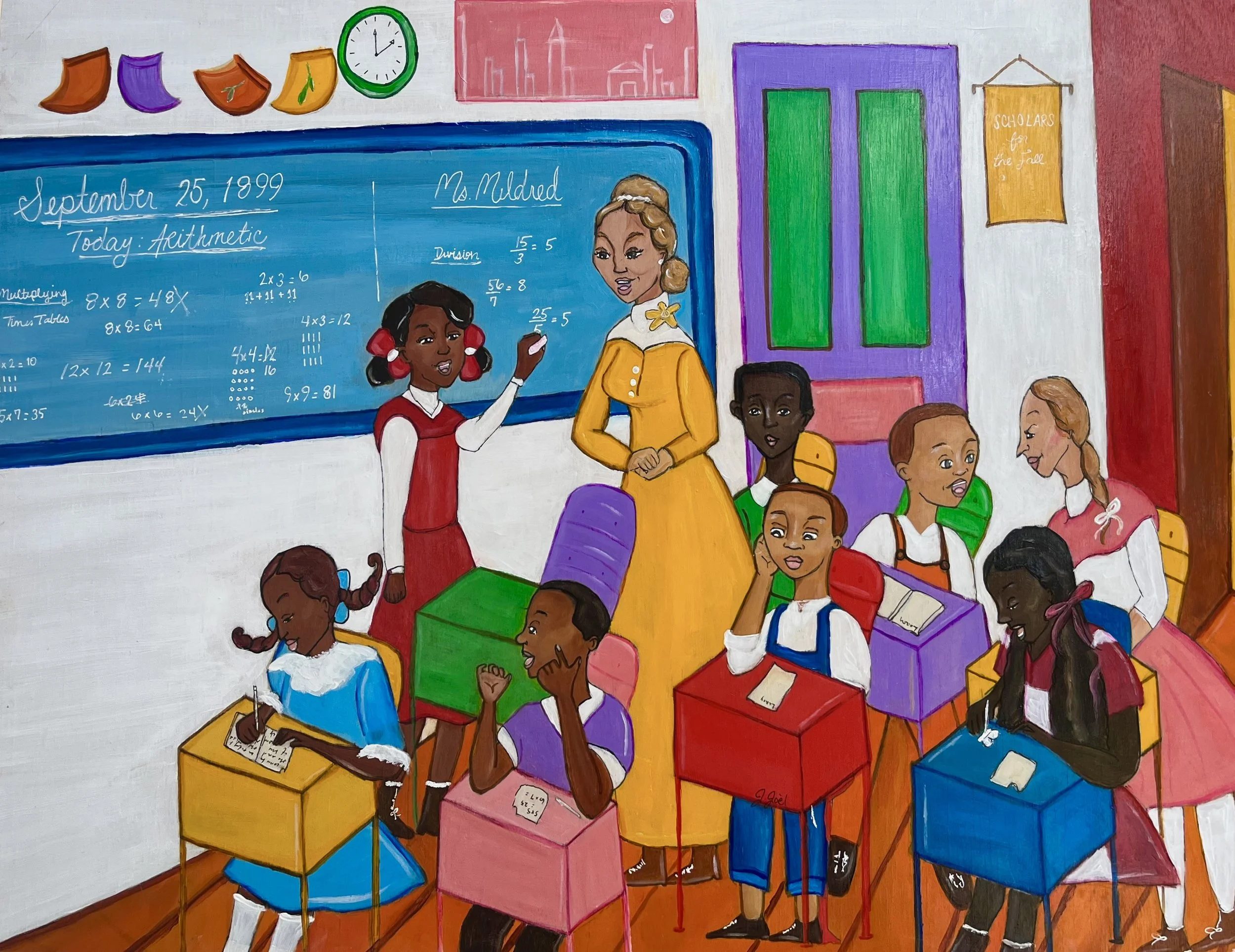
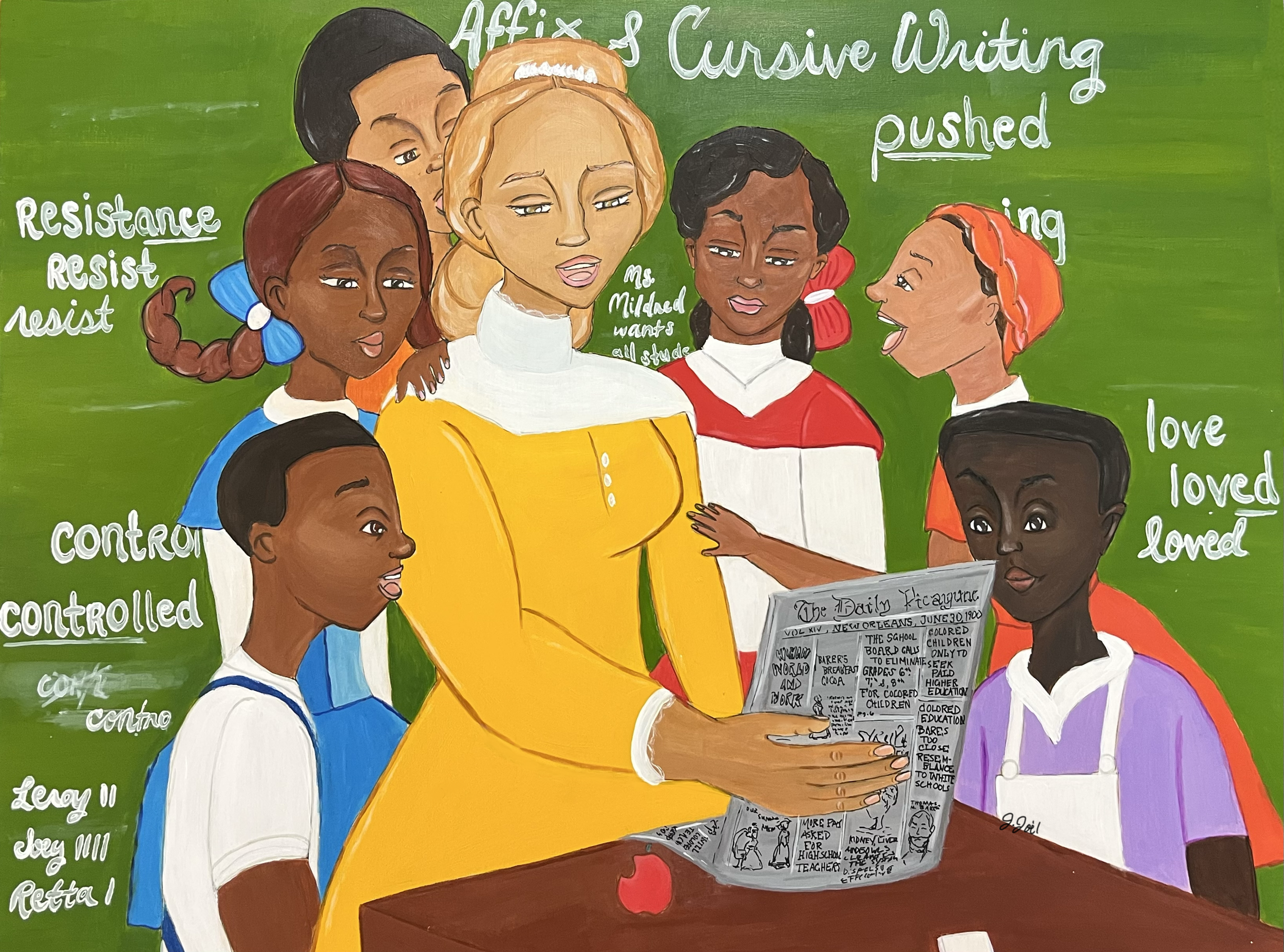
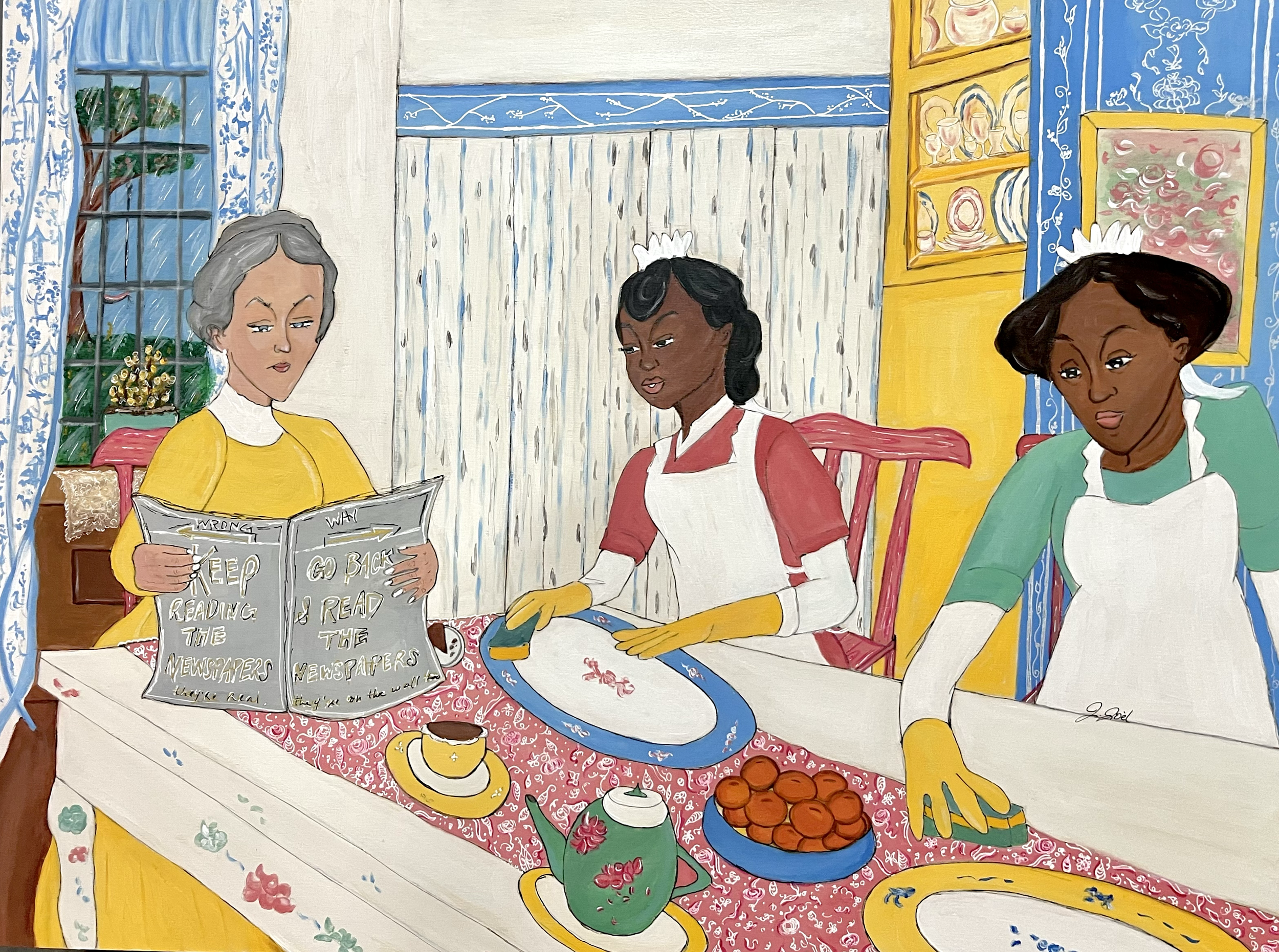
Jemima Joèl, The Story of Judy: 1, acrylic on wood, 18 x 24 inches, 2025
Jemima Joèl, The Story of Judy: 3, acrylic on wood, 18 x 24 inches, 2025
Jemima Joèl, The Story of Judy: 4, acrylic on wood, 18 x 24 inches, 2025
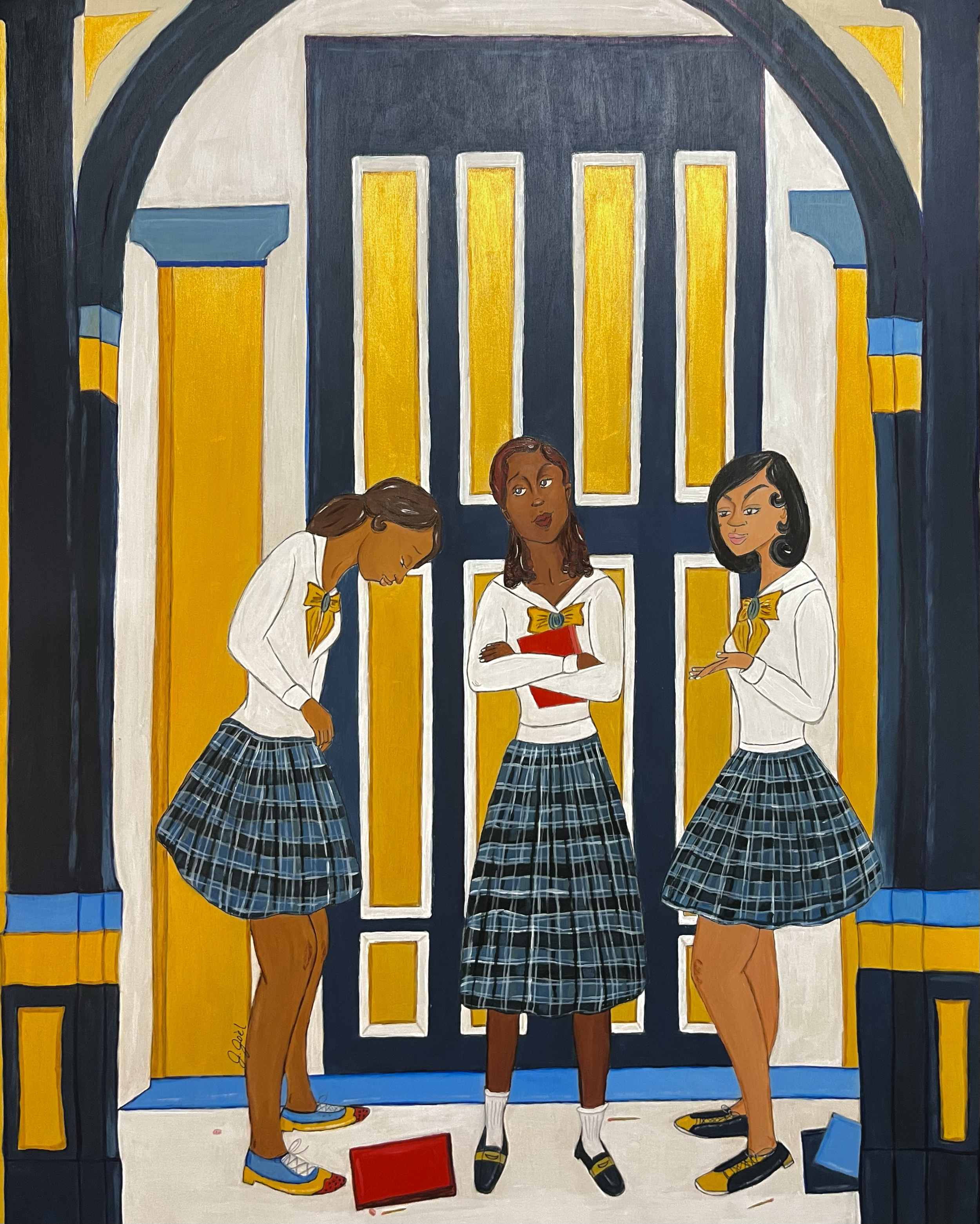
Jemima Joèl, Battle of the Skirts: Hike it Up, acrylic on wood, 18 x 24 inches, 2025
Getting to Higher Education: Come Hell or Highwater
Jemima Joèl
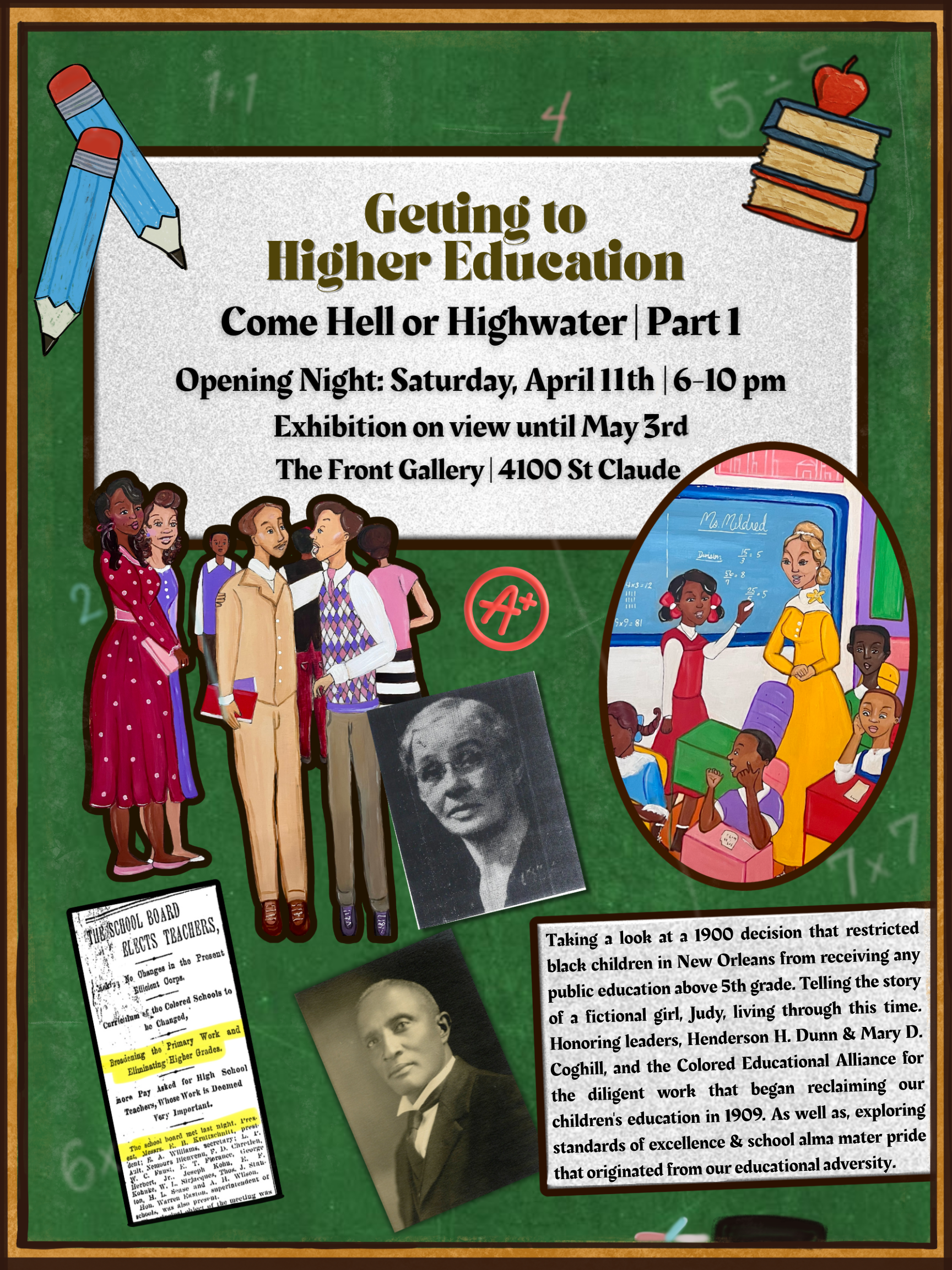
This exhibition is titled Getting to Higher Education: Come Hell or High Water. Through the story of a fictional girl named Judy, this series will explore the adversity that black people in New Orleans faced in their efforts to educate themselves under Jim Crow. We will use this series to explore standards of excellence in education and pride in school alma mater that developed from this level of adversity.
The series will begin in 1900. This exhibition was created to highlight a shocking decision I learned about that occurred in 1900 where the New Orleans School Board decided that black children could only attend public education up to the fifth grade. The board decided to eliminate grades 6, 7, and 8. We infer that the decision was created to limit access to education for black children with the intention to keep black children bound to domestic and agricultural roles in service to white America. This decision, enacted after the Reconstruction period, symbolizes a time in which Jim Crow laws began to gain control in the states after attempts to promote a more equitable society following the abolition of slavery.
At the beginning of the story of Judy, we will meet her in school, a bright and engaged student. But once her grade school teacher, Ms. Mildred, reads the news of the decision to her 5th-grade class, Judy's life drastically changes. We later see her wrapped up in a life of domestic service, working with a maid with her mother. But Judy, having learned how to read, stays informed by reading local newspapers. Later in the depiction, we see Judy all grown up, and when she learns that grades 6, 7, and 8 have reopened. She quickly acts to enroll her brother into school. Grades 6, 7, and 8 were reopened after a long fight from the community for 9 years. The Colored Educational Alliance, led by Henderson H. Dunn and Mary D. Coghill (UNTNO 2016), worked to establish black high schools from 1917 to 1942. The alliance first opened the city’s first black high school, McDonough 35 on S Rampart Street in 1917. Returning to the story of Judy, viewers will be happy to see a new generation regaining access to school, but it calls into question: Do you believe Judy would have ever gone back into the school system or has she lost that future: now being a maid? This question allows viewers to ponder on just how deafening this decision was for the trajectory of an individual life. I hope viewers grapple with what they want for Judy and what they think would be a realistic answer.
During my research process, I visited the New Orleans Public Library’s archival records and Dillard University’s archives. I looked through yearbooks and college catalogs to bring inspiration to my pieces. This series is dedicated to New Orleans schools. These narratives are love letters to my own educational experience here in New Orleans and those who came before me.
Jemima Joél (New Orleans, LA, b. 1999) is a multidisciplinary artist, holding titles such as a singer, visual artist, writer, and activist. She studied Sociology and African American Studies at Loyola University, where she received her Bachelor’s degree in 2021. She is a member of The Front Gallery in the Ninth Ward and has performed music at many notable musical venues in New Orleans, such as the Dew Drop Inn and The Broad Theatre. She has also been featured on Great Day Louisiana for her music and art with her band, Jemima Joèl & The Gaias. Most recently they released two songs, “I’ve Got Me a New Orleans Boy”, and “Burgundy Beauty.”
@thewomanwhosingsandpaints www.thewomanwhosingsandpaints.com WWLTV ,Great Day Louisiana
Room 2
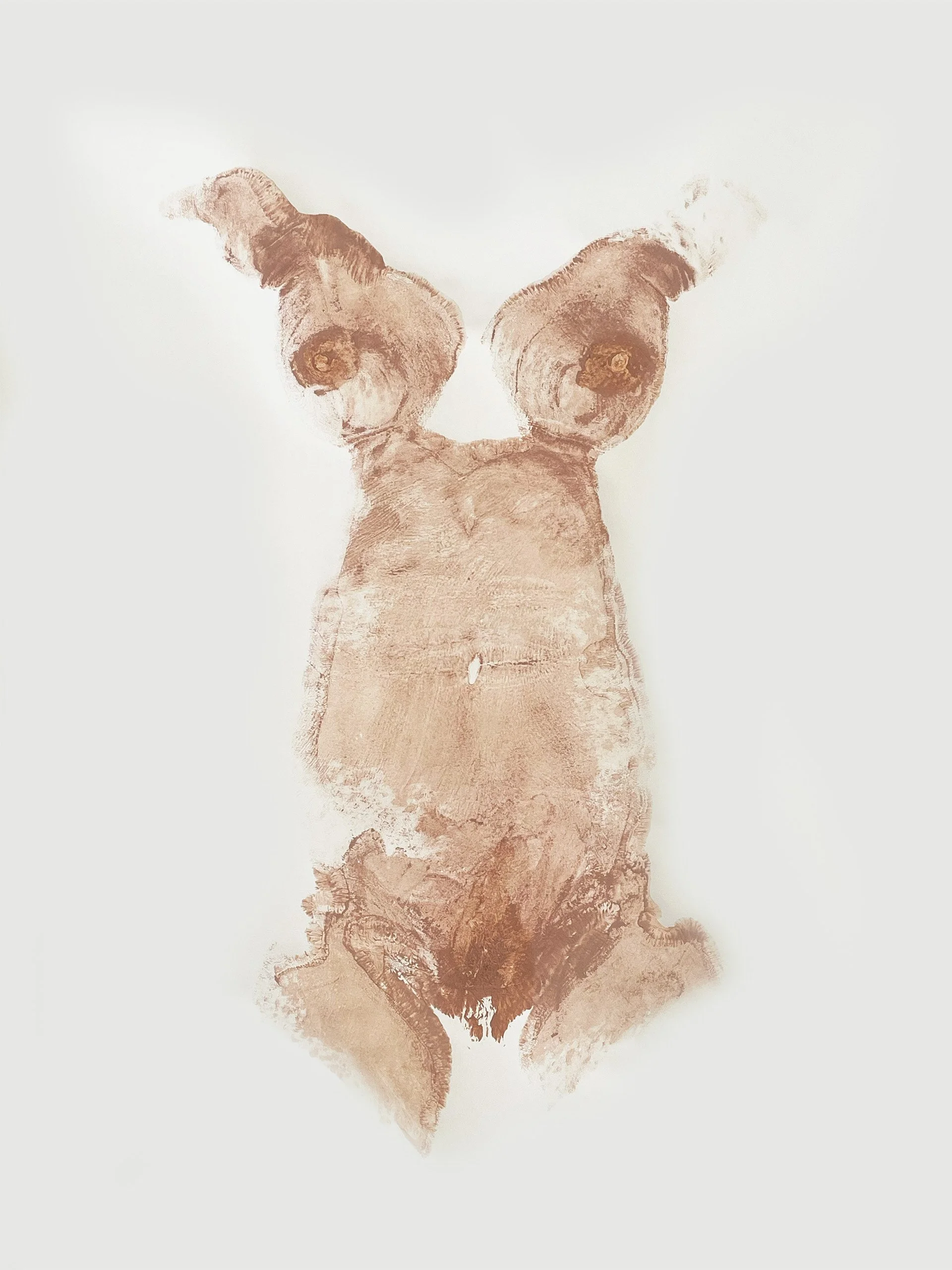
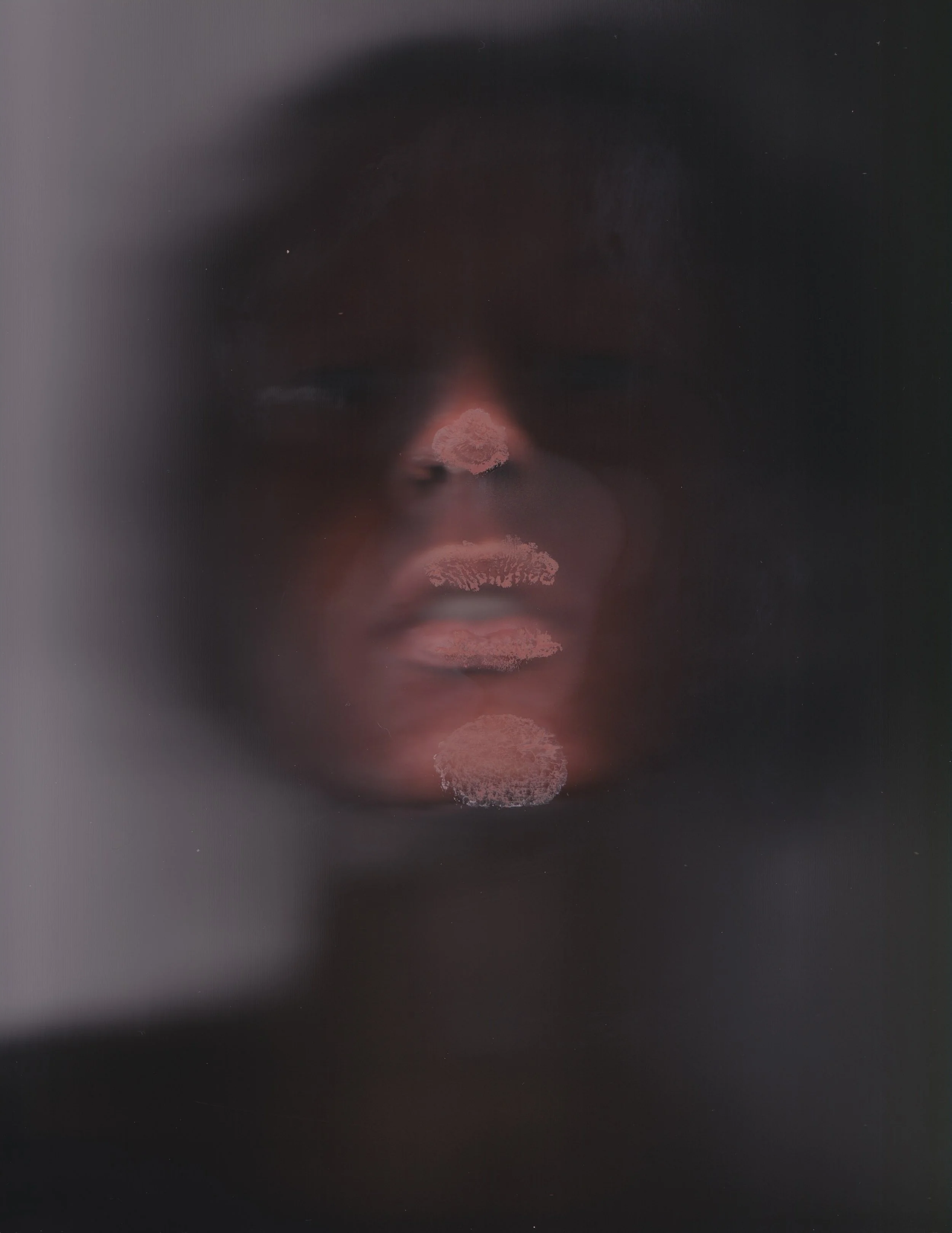
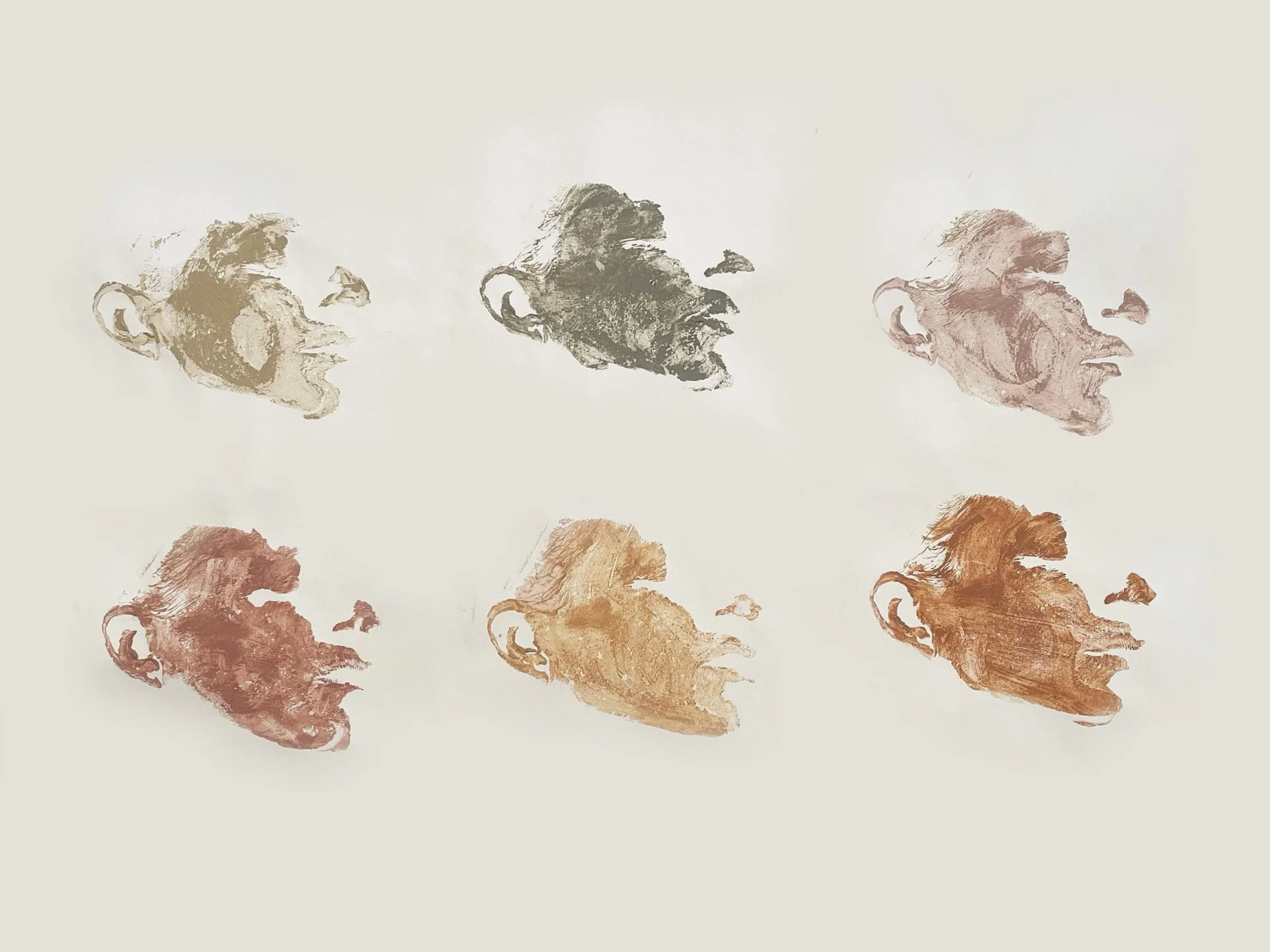
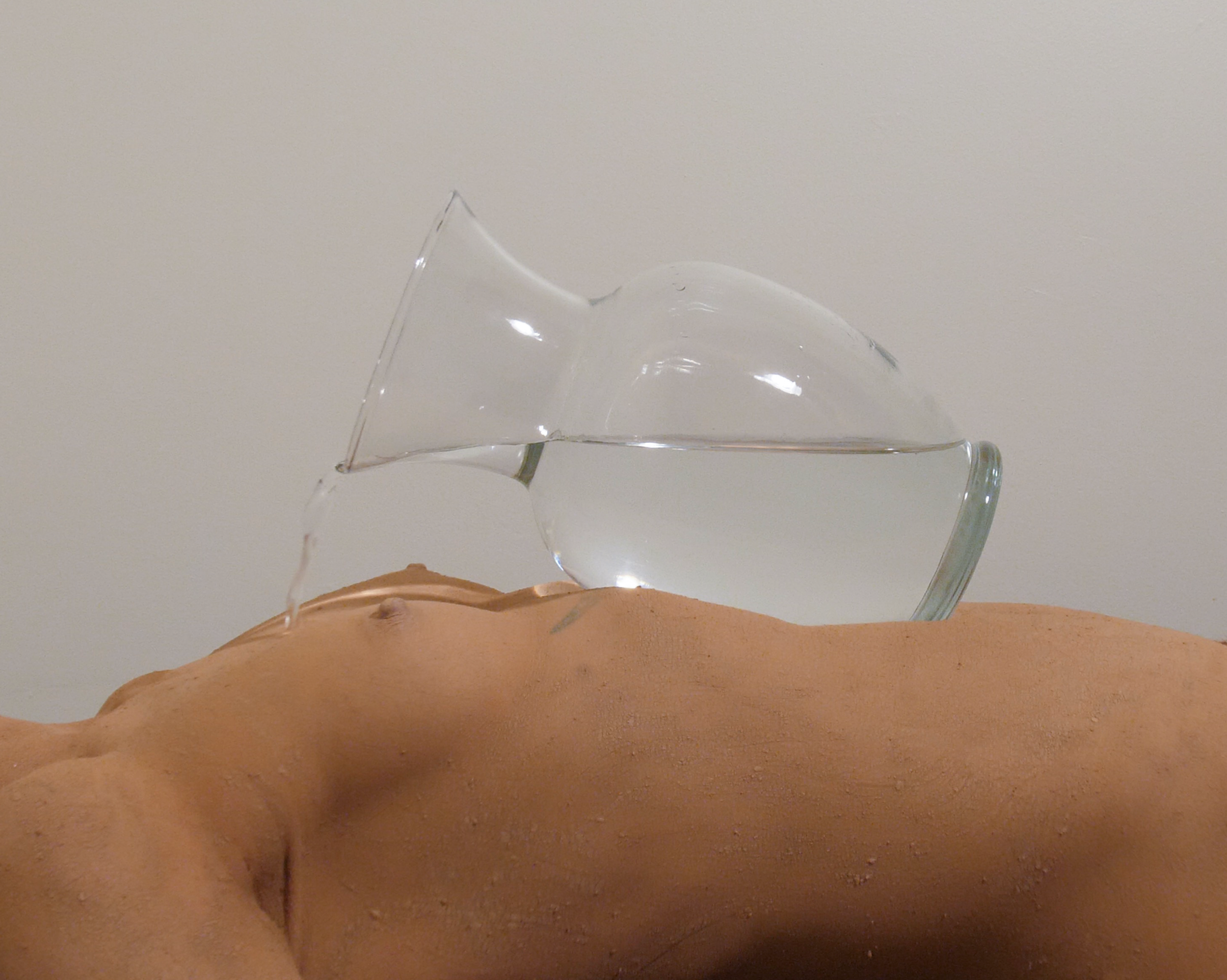
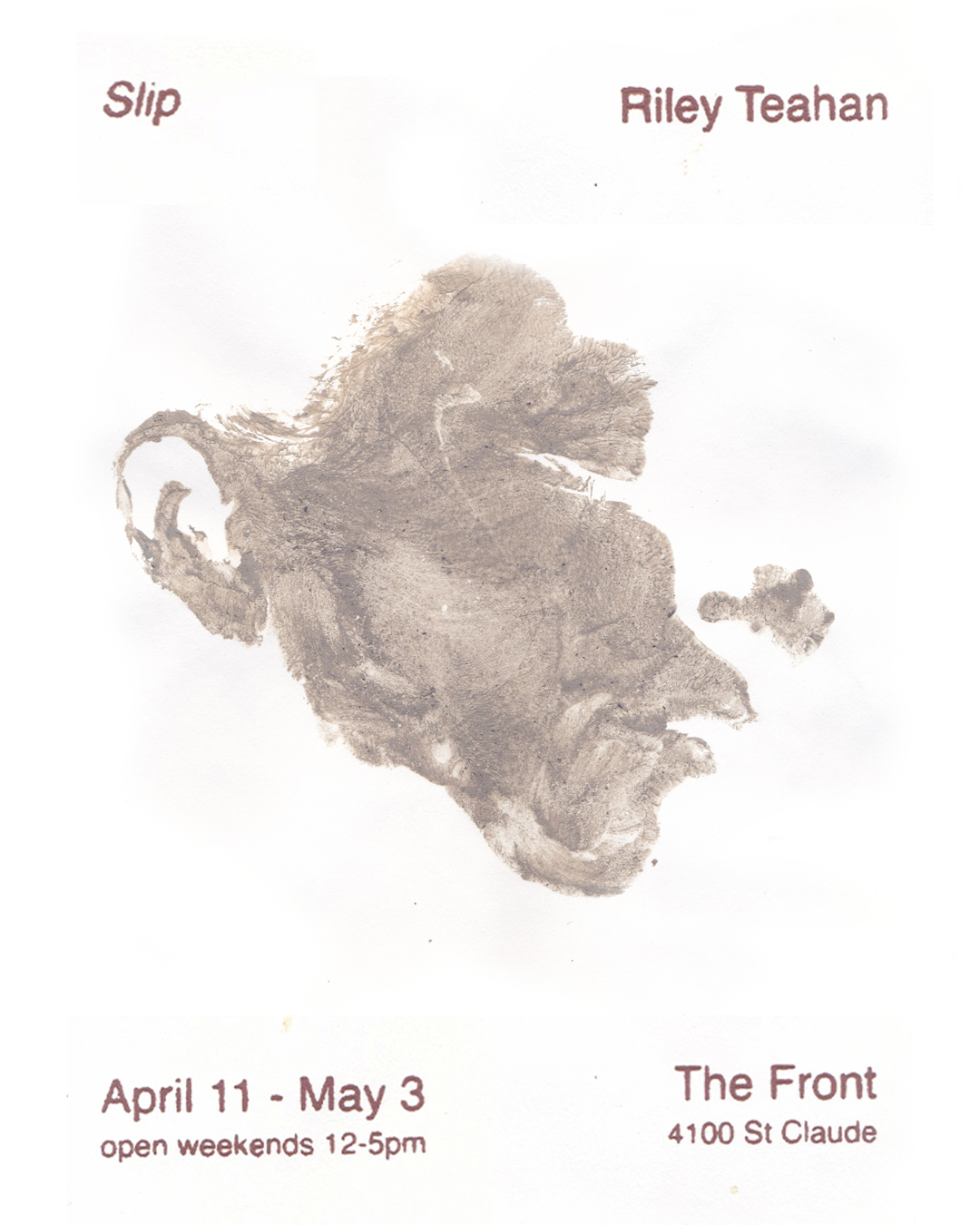
Slip
Riley Teahan
In ceramics, slip is the watery clay mixture used to join things together — body to body
How I press my body into yours
Dig my fingers in
Let out what I’ve been holding in
During a time of clearing I found a box of old dry clay
Pigments I’d harvested all over the south;
Bogue Chitto, Lake Hartwell, Red Bluff, Long Beach, Baton Rouge
I add rainwater and they come alive again
Each one holding the wisdom of its place and time
And the potential of right now
What will you make of this?
I return to old practices and materials
And feel that nothing is as it was
It is familiar, but I am changed
But when I am head to toe covered in clay
I am just a body
ancient and yielding
Riley Teahan is an interdisciplinary artist working intimately with the body and nature. She is the co-director of Mortal Self; a multimedia production company to inspire healing with the land. Riley enjoys experimenting with many different materials, usually harvested in the wild or at the thrift store. She is a member of The Front.
www.rileyteahan.com @rileyteahan
Room 3
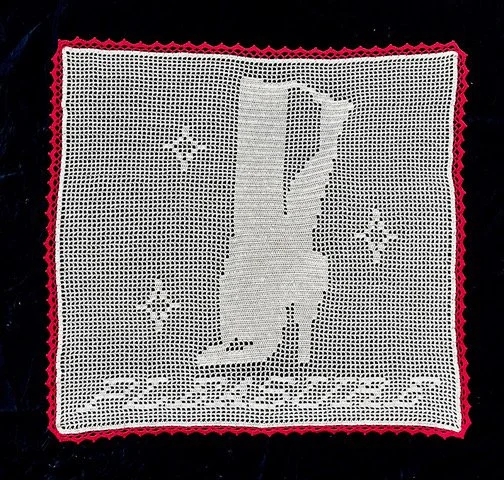
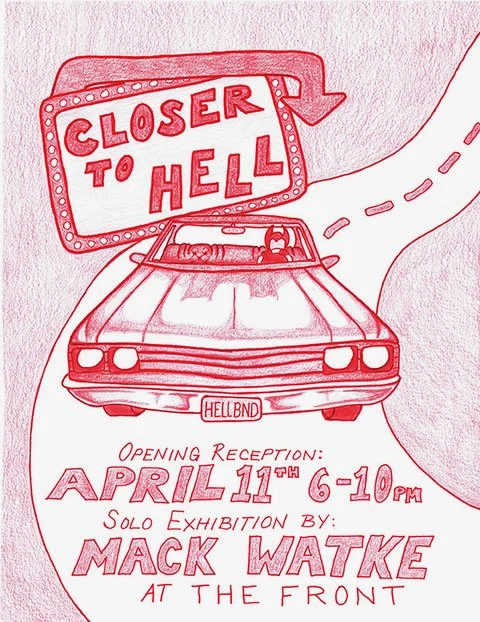
Mack Watke, With Pleasure, filet crochet, 24x22, 2025
Closer to Hell
Mack Watke
It started as a passing joke in conversation. We noted bad posture around the city, and we joked that this was because the Devil was pulling ‘em down Closer to Hell. This became the inspiration and foundation for my exhibit. Closer to Hell explores a metaphysical relationship to the ground. Things that live on the ground, move on the ground, get pulled to the ground.
Mack Watke is a multidisciplinary artist from Santa Cruz California. Much of her vision has been formed by being a feral adoptee raised next to an amusement park, and later deepened by making New Orleans home. Her current work is largely defined by fiber arts with a particular interest in traditional techniques like weaving, handmade net, and filet crochet. Connection being her driving force, these techniques support connection between maker and material, knowledge bearer and learner, lost ones and living ones, and past and present. No person, and no craft, is a stranger to Mack.
room 4
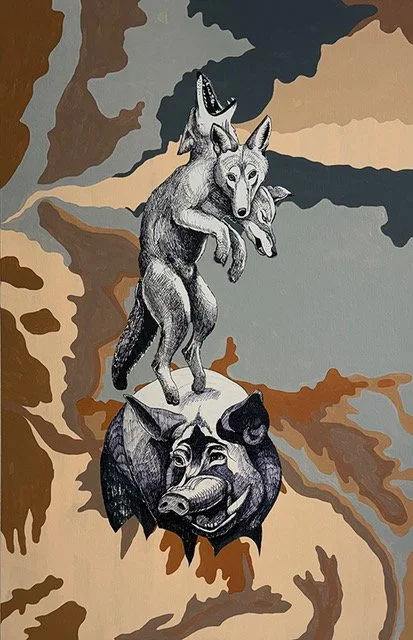
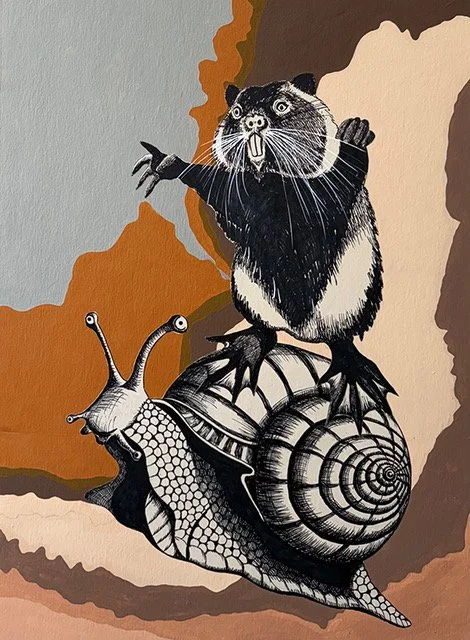
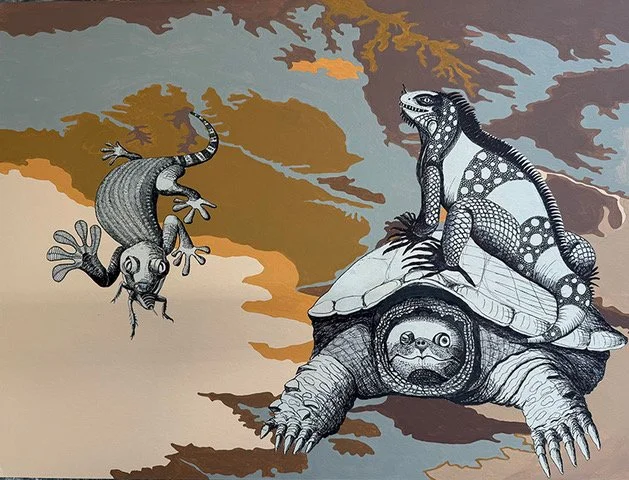
Ulrika Matthiessen, Coyote, Feral Hog, Permanent marker, newsprint, acrylic paint on chipboard, 44 x 28 inches, 2026
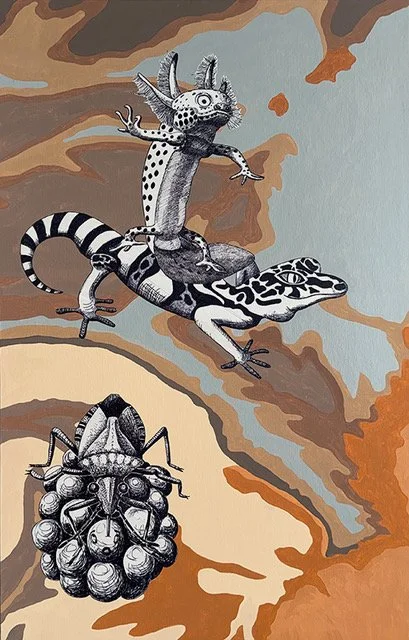
Ulrika Matthiessen, Alpine Newt, Black and white Tegu, Marmorated Stinkbug, Permanent marker, newsprint, acrylic paint on chipboard, 44 x 28 inches, 2026
Ulrika Matthiessen, Nutria, Giant African Snail (detail), permanent marker, newsprint, 44 x 28 inches, 2026
Ulrika Matthiessen, Mediterranean House Gecko, Green Iguana, Snapping Turtle, Permanent marker, newsprint, acrylic paint on chipboard, 30x 40 inches, 2026
No Such Thing as Invasive Species
Ulrika Matthiessen
“Invasive species” is a label applied to plants and animals that have arrived on our shores from elsewhere and are highly successful at acclimating and reproducing, outcompeting the so-called natives and altering ecosystems. Many are purposely brought by humans for various reasons, or they are stowaways who get out of our control. Some cross the invisible borders separating countries.
But at what point is it decided who or what is native when people and animals have migrated across the globe for millennia to survive? In the United States, whatever plants and animals the first European colonists encountered upon arrival are considered native. The language used to describe these animals is often militaristic, calling for their extermination and removal or for the “eradication of the alien invaders” as if they were an enemy army. There is also a nativist bias that introduced species bring negative consequences, and we must prevent their arrival. They are called prolific breeders that establish permanent residence in places they don’t belong, aggressive killers, or border-crossing disease-carrying hosts that will harm the native population. There are remarkable parallels with the language demonizing human immigrants.
In this exhibition, I depict animals, most of which have appeared on or could appear on a list of “invasive species,” as characters with distinct personalities and value, rather than their being seen only as part of a destructive horde.
Ulrika Matthiessen is a multidisciplinary artist based in New Orleans, born in Sweden, and raised in the American Deep South.